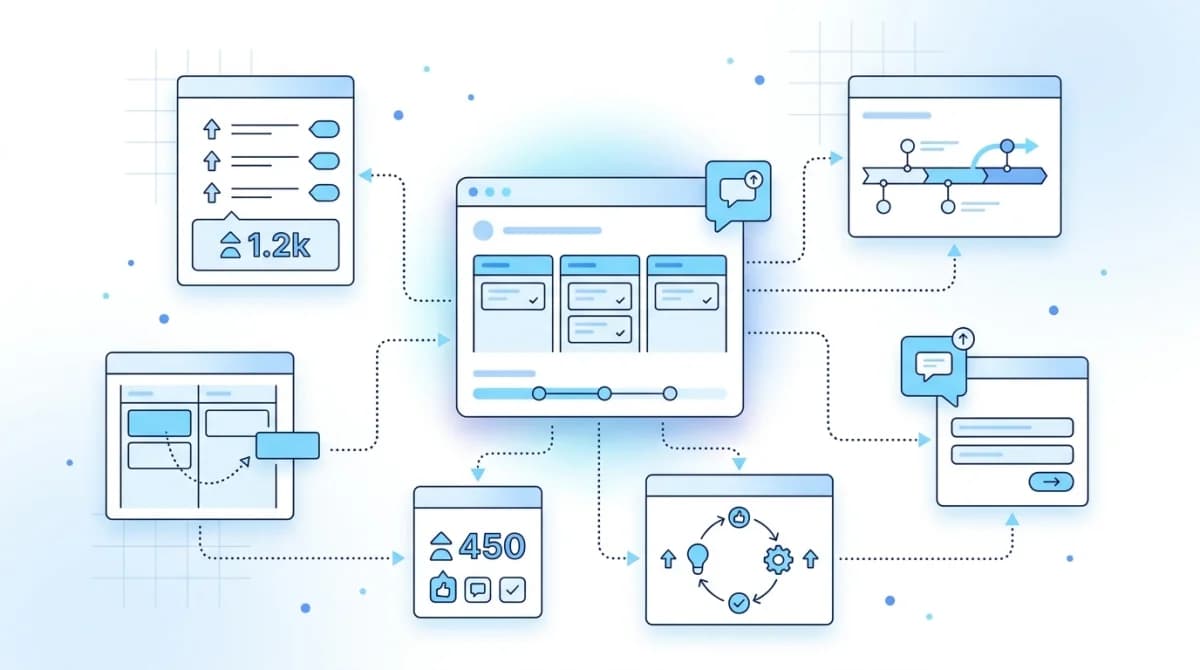
Featurebase is a legitimately good feedback management tool. Modern UI, built-in AI, a changelog, and a roadmap in one product. At $29/seat/month for the Growth plan and $59/seat/month for Professional, it sits in the middle of the market. For many teams, it is the right call.
Before going further: if your team qualifies for Featurebase's Startup Program (founded under two years ago, fewer than six employees), you get 86% off Professional, which puts you around $4/seat/month. That is cheaper than nearly every Featurebase alternative below. Take that deal if you qualify. It is the best pricing in the category and almost nobody talks about it because it is buried on the pricing page.
If you do not qualify, or you want a different fit for reasons beyond pricing (open feedback loops, no per-seat charges, larger free plan, different integration set), this comparison is for you.
I run Feeqd, a competing feedback management tool, so I have a stake in this. I will be upfront about where Feeqd fits and where another tool is the better answer.
Pricing verification note: All pricing cited below was verified on 2026-04-21 against each vendor's public pricing page. Vendors change plan names and prices regularly, so always cross-check before committing.
A Featurebase alternative is any tool that offers the three capabilities Featurebase bundles: public feedback boards with voting, a product roadmap, and some form of changelog or announcement surface. Tools below are ranked by how many of those three they cover, plus price and fit.
Quick Comparison
| Tool | Free Plan | Starting Price | Widget | Public Roadmap | AI Features | Best For |
|---|---|---|---|---|---|---|
| Featurebase | Yes (limited) | $29/seat/mo | Yes | Yes (timeline) | Yes (paid add-on) | Modern all-in-one |
| Feeqd | Yes (3 boards, 100 entries) | $19/mo (flat) | 18KB embed | Yes (Kanban + list) | No | Free plan + widget |
| Canny | Yes (1 board, 25 users) | $19/mo (Core) | Yes | Yes | Yes | Enterprise feedback loops |
| Frill | Yes (limited) | $25/mo | No | Yes | No | Roadmap + changelog focus |
| Nolt | No | $29/mo | No | No | No | Simple voting-only boards |
| UserJot | Yes | $29/mo | Yes | Yes | No | Lightweight, startup-friendly |
| Productboard | No | ~$20/user/mo | No (external) | Yes | Yes | Enterprise product management |
| Quickhunt | Yes (limited) | $19/mo | Yes | Yes | Yes | AI-first challenger |
Why Teams Look for Featurebase Alternatives
Featurebase is modern, well-built, and priced competitively against older incumbents like Canny and UserVoice. The most common reasons teams compare Featurebase competitors and look elsewhere:
- Per-seat pricing scales faster than expected once team size grows beyond three or four. A 10-seat team on Growth is $290/month.
- No permanent free plan with meaningful limits. The free tier exists but is restrictive; most real usage lands on a paid tier.
- Different integration priorities. If your team lives in Linear or GitHub rather than Jira and Intercom, other tools may fit better.
- Wanting a specific feature Featurebase does not lead on (simpler Kanban roadmap, custom subdomain without upgrade, larger free plan).
- Brand and UX preference. Public feedback boards are a trust signal; teams want one whose look matches their own product.
The seven tools below cover those reasons across different price points and use cases.
1. Feeqd: best free plan + lightweight widget
Feeqd combines public feedback boards with community voting, an 18KB embeddable feedback widget, and a Kanban-style product roadmap. Each workspace gets a custom subdomain (yourteam.feeqd.com) on every plan, including the free one.
Free plan: 3 feedback boards, 100 entries, 1 roadmap, 1 workspace, 1 admin seat, unlimited end-user voters. No credit card required. The free plan is permanent, not a trial.
Paid plans: Pro at $19/month flat (not per seat), 5 boards, 2 widgets, 2 roadmaps, 2 team seats. Pro Team at $49/month adds more quotas; Business at $199/month unlocks SSO and audit logs.
Where Feeqd beats Featurebase:
- Flat pricing vs per-seat. A 5-person team on Feeqd Pro Team is $49/month total; on Featurebase Growth that is $145.
- Free plan with a custom subdomain and public board (Featurebase gates custom domains behind higher paid tiers).
- 18KB widget is lighter than most alternatives, with 18 block types and conditional logic.
- Kanban + list roadmap views included.
Where Featurebase beats Feeqd:
- AI features (auto-categorization, translation, summarization) if you pay for them.
- Built-in changelog as a first-class product surface (Feeqd does not ship a dedicated changelog module).
- Deeper Intercom and Jira integrations today.
- More mature admin controls on higher tiers.
Best for: bootstrapped SaaS, indie makers, and early-stage teams who want a complete feedback loop (boards, voting, roadmap, widget) without per-seat pricing.
2. Canny: best for mature enterprise workflows
Featurebase vs Canny is the most common head-to-head in this category. Canny is the incumbent and the tool Featurebase most often compares itself against. It is mature, has deep integrations across Jira, Intercom, Salesforce, Segment, and HubSpot, and ships a changelog and public roadmap as core features.
Free plan: 1 board, up to 25 tracked users (reduced from 100 in the latest plan revision). Workable for very small teams, restrictive above that.
Paid plans (verified 2026-04-25): Free, Core at $19/month, Pro at $79/month, Business custom (5,000+ tracked users, SSO, custom roles). Canny renamed plans in 2026, so older comparisons referencing "Starter" and "Growth" are outdated. Always check canny.io/pricing before signing.
Where Canny beats Featurebase:
- Deeper enterprise integrations and a longer track record.
- More established brand: customers have been running Canny for years.
- Admin controls and SSO options on higher plans.
- Stronger category credibility with procurement-heavy buyers.
Where Featurebase beats Canny:
- Lower entry price ($29 vs $79).
- More modern UI and faster iteration cycle.
- AI features built in.
- Startup pricing program (86% off).
Best for: mid-size teams and above already running Canny, teams with Jira plus Intercom as the backbone, and procurement buyers who want the established name. See our best Canny alternatives guide for the broader picture.
3. Frill: best if you care most about the roadmap
Frill focuses on the three public-facing pillars of product management: ideas, roadmap, and announcements (changelog). It is simpler than Featurebase, cheaper than Canny, and leans into the roadmap as the primary product surface.
Free plan: available with basic features (ideas + roadmap + announcements) and Frill branding.
Paid plans (verified 2026-04-21): Startup at $25/month, Business at $49/month, Growth at $149/month. Per workspace rather than per seat, so team growth stays cheap. Check frill.co/pricing for current plan names and prices.
Where Frill beats Featurebase:
- Per-workspace pricing (team size does not inflate the bill).
- Simpler, more focused product: less to learn, less to configure.
- Strong roadmap and changelog as core surfaces rather than adjacent features.
Where Featurebase beats Frill:
- More advanced feedback management and triage features.
- AI features.
- Stronger integrations catalog.
- Removes branding earlier than Frill does.
Best for: smaller teams who want a clean public product roadmap, changelog, and feedback in one tool without paying per seat.
4. Nolt: best simple voting board
Nolt is the most stripped-down option on this list. It does one thing: public feedback boards with voting. No roadmap, no changelog, no widget. Just a clean, simple board you can share with users.
Free plan: none. All usage is paid.
Paid plans (verified 2026-04-21): Starter at $29/month for one board; team plans scale up from there. Nolt's pricing is per board rather than per seat, so check nolt.io/pricing if you need more than one board.
Where Nolt beats Featurebase:
- Simpler. If all you want is a public voting board, Featurebase is overkill.
- Cleaner UI for end users who just want to upvote ideas.
- Easier to explain to stakeholders: "here is the board, here is the feature, vote."
Where Featurebase beats Nolt:
- Roadmap and changelog included.
- Widget.
- More advanced feedback management (statuses, tags, admin tools).
- AI features.
Best for: teams who already have a roadmap tool and a changelog solution and only need a public voting board to layer on top.
5. UserJot: best lightweight contender
UserJot is a newer entrant with a lightweight philosophy close to Feeqd's. Public boards, voting, roadmap, changelog, and an embeddable widget. The brand positions itself as a simpler Canny or Featurebase.
Free plan: available with basic features.
Paid plans (verified 2026-04-21): start around $29/month. Per workspace rather than per seat, which keeps growth costs down. Confirm at userjot.com/pricing before signing.
Where UserJot beats Featurebase:
- Simpler interface with less to configure.
- Flat pricing (per workspace) rather than per seat.
- Clean default look that works well for public boards.
Where Featurebase beats UserJot:
- Longer track record and larger customer base.
- AI features.
- More advanced admin controls.
- Stronger integrations catalog.
Best for: small product teams who want a direct Featurebase alternative with simpler pricing and a minimal feature set. Close in spirit to Feeqd; the choice between the two usually comes down to free-plan generosity (Feeqd's is broader) and UX preference.
6. Productboard: best if you are doing full product management
Productboard plays in a slightly different league: it is a full product management platform rather than a feedback-first tool. Feedback portal, insights, roadmap, prioritization frameworks, and an integration with every ticketing tool you can think of.
Free plan: none.
Paid plans (verified 2026-04-21): start around $20/user/month for the base tier; Enterprise pricing on request. Per-seat costs scale quickly for bigger teams. Productboard's pricing changes across Essentials/Pro/Scale tiers, so check productboard.com/pricing before budgeting.
Where Productboard beats Featurebase:
- Broader product management capabilities beyond feedback alone.
- Prioritization frameworks built in (scoring, objectives, strategic alignment).
- Enterprise-grade integrations and admin tooling.
- Stronger fit for PMs running multi-quarter planning cycles.
Where Featurebase beats Productboard:
- Much cheaper at the low end.
- Simpler to set up: live in a day vs configured for a week.
- Better fit for lightweight public feedback boards.
- Free plan exists.
Best for: larger product organizations who need feedback as one piece of a broader product feedback management workflow, not the primary tool.
7. Quickhunt: best AI-first challenger
Quickhunt is a newer entrant that leans heavily into AI: automatic idea summarization, sentiment tagging, and roadmap suggestions. Public boards, voting, roadmap, changelog, and widget are all included.
Free plan: available with basic features.
Paid plans (verified 2026-04-21): start around $19/month at the lowest tier. Workspace-based pricing; confirm at quickhunt.co/pricing before committing.
Where Quickhunt beats Featurebase:
- AI built into the lower tiers rather than as a paid add-on.
- Aggressive pricing at the entry level.
- Fast iteration: ships features frequently.
Where Featurebase beats Quickhunt:
- More mature product with a longer track record.
- Better-known brand with procurement buyers.
- More established integrations catalog.
- Startup program undercuts Quickhunt's pricing if you qualify.
Best for: teams who want AI features without paying for an add-on and prefer trying newer tools over established names.
How to Choose
Ask three questions. The answers usually point clearly at one or two tools.
1. Do you qualify for Featurebase's Startup Program?
If yes (founded under two years, fewer than six employees), use Featurebase. 86% off Professional beats every alternative on price for the features you get. Revisit in 18-24 months when the discount expires.
2. Is pricing the top blocker?
If per-seat pricing is the issue, Feeqd, Frill, or UserJot are the strongest alternatives. All three offer per-workspace or flat pricing, so team growth does not balloon the bill. Feeqd has the broadest free plan; Frill leans roadmap-first; UserJot is the lightest.
3. Do you need enterprise integrations and admin controls?
If yes, Canny or Productboard. Both have deeper catalogs and more mature admin tooling. Canny is specifically a feedback tool; Productboard is a full product management platform.
If your main job is a simple public voting board and nothing else, Nolt is the cleanest pick. If you want AI built in at the entry tier, Quickhunt is worth testing.
Most teams I have watched over the last two years end up with one of three answers: Feeqd (bootstrapped, free plan matters, widget matters), Canny (mid-market with Jira and Intercom already wired up), or Featurebase Startup Program (small team, qualifies for the discount, happy to trade flat-pricing clarity for AI features).
FAQ
Who are Featurebase's main competitors?
Canny is Featurebase's most direct competitor in feedback management. Beyond that, Frill, Nolt, UserJot, and Quickhunt compete in the same lightweight category. Productboard and UserVoice compete at the enterprise end. Feeqd (our tool) competes on free-plan generosity and widget performance.
Is there a free alternative to Featurebase?
Yes. Feeqd's free plan includes 3 boards, 100 entries, 1 roadmap, community voting, a custom subdomain, and an embeddable widget. Frill and UserJot also offer free plans with smaller limits. Canny has a free tier (1 board, 25 tracked users in the latest plan revision) but locks the roadmap behind paid plans.
Is Featurebase worth the price?
For teams that qualify for the Startup Program (86% off Professional), almost certainly yes. For teams on the Growth tier ($29/seat/month) with five or more people, the math depends on whether you need the AI features and integrations. A 10-person team is $290/month on Featurebase Growth; the same team on Feeqd Pro Team is $49/month flat. If you do not need the AI or deeper integrations, a simpler tool is usually the better call.
What is the difference between Featurebase and Canny?
Featurebase ($29/seat/month Growth) and Canny ($19/month Core, $79/month Pro after the 2026 plan revision) are now closer in entry-tier pricing than they used to be. Featurebase has a more modern UI and includes AI features at the Growth tier. Canny is older, has deeper enterprise integrations, a more established brand, and better procurement credibility. For most product teams under 50 people, the choice usually comes down to per-seat (Featurebase) versus per-tracked-user (Canny). For enterprise buyers who want the established name and Jira, Intercom, or Salesforce depth, Canny still wins.
Can I self-host a Featurebase alternative?
Featurebase itself is not open source. For self-hosted open source feedback tools, Fider is the most mature option (Go-based, MIT license, community-maintained). It covers feedback boards with voting but does not ship a widget or public roadmap at Featurebase's level of polish. We covered the open source picture in the UserVoice alternative open source guide.
Get started with Feeqd for free
Let your users tell you exactly what to build next
Collect feedback, let users vote, and ship what actually matters. All in one simple tool that takes minutes to set up.
Sign up for free